
What You Need to Know About Health Canada’s Medical Device Classifications and Licensing
Whether you are an established medical device manufacturer or entering the Canadian market for the first time, determining the
Red-light therapy devices have become increasingly popular across the beauty, wellness, and dermatology markets. From LED face masks to handheld light therapy tools, these products are often positioned as non-invasive solutions for skin appearance, acne-prone skin, inflammation, and signs of aging.
However, in Canada, the way a red-light therapy device is marketed matters. A product that appears to be a cosmetic or wellness device may still fall under Health Canada’s medical device framework if it is promoted with therapeutic claims or designed to produce a physiological effect.
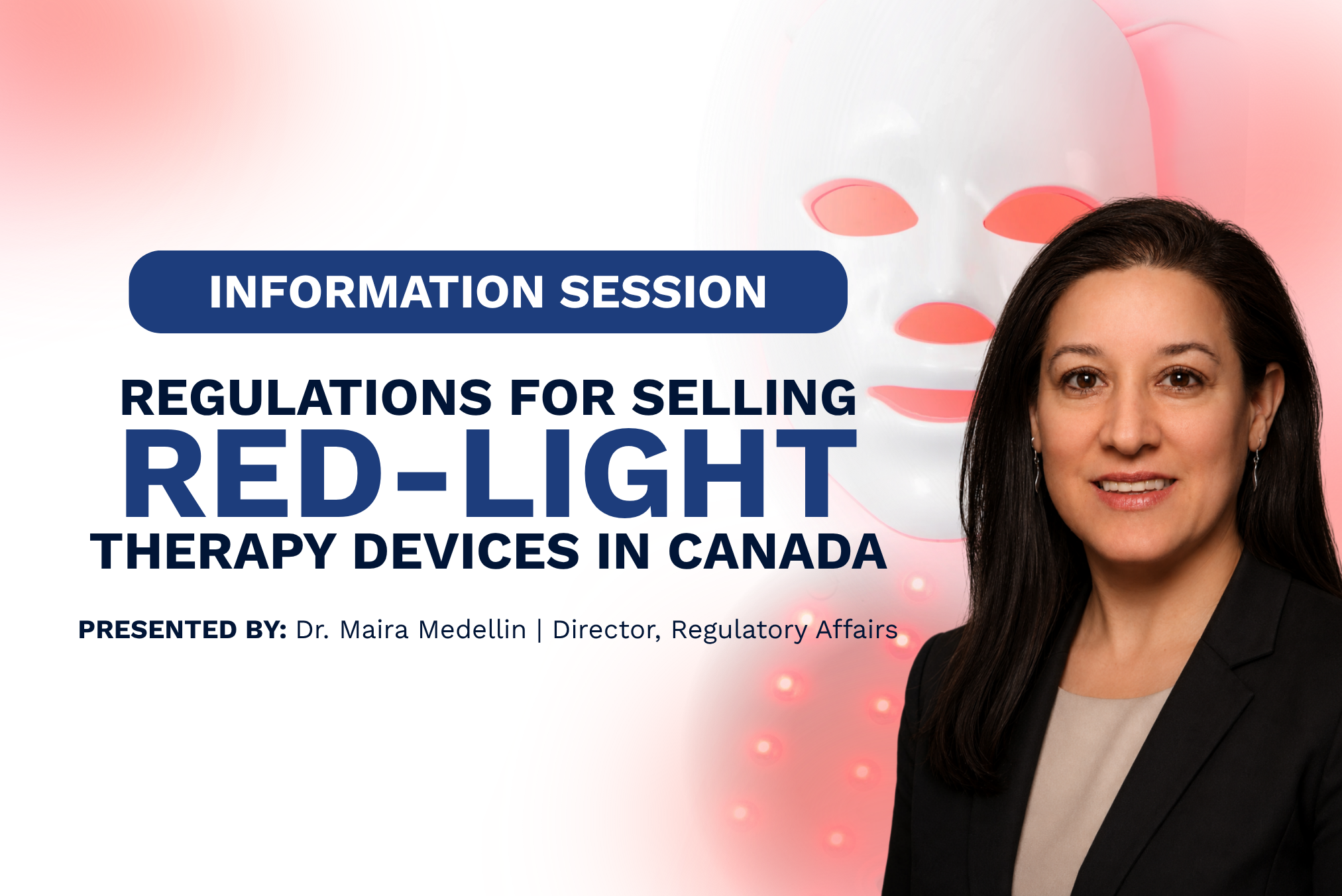
In this recorded presentation, Dr. Maira Medellin from Source Nutraceutical, Inc. (SNI) explains the key compliance considerations for selling red-light therapy devices in Canada, including classification, licensing, quality system requirements, importer and distributor obligations, and post-market responsibilities.
This session provides a practical overview of the Canadian regulatory pathway for red-light therapy masks and LED light therapy devices. Topics include:
Under Canada’s Medical Devices Regulations, Class II, III, and IV medical devices require an MDL before they can be sold in Canada. Importers and distributors may also require an MDEL, which is separate from the product-specific device licence. Health Canada also requires active MDEL holders to complete an Annual Licence Review before April 1 each year to maintain their licence in good standing.

For companies entering the Canadian market, a red-light therapy device should not be assessed based only on its product category or commercial positioning. Claims such as “treats acne,” “reduces inflammation,” “stimulates collagen,” or “clinically proven therapeutic results” may significantly affect the regulatory pathway.
A clear classification strategy at the beginning of product development or market entry can help reduce delays, avoid unsupported claims, and ensure that the appropriate licensing, quality system, and labelling requirements are addressed before launch.
Bringing a red-light therapy device to the Canadian market requires more than understanding whether the product is cosmetic, wellness-focused, or therapeutic. It requires a regulatory strategy that aligns the device’s intended use, claims, technical specifications, quality system requirements, labelling, and market positioning with Health Canada’s medical device framework from the outset.
SNI supports companies with red-light therapy device classification, Canadian MDL and MDEL strategy, U.S. and Canadian pathway comparisons, quality system guidance, claims assessment, bilingual label review, and regulatory submission preparation. Our team helps determine whether a red-light therapy mask, LED skin treatment device, or broader light therapy product line is subject to medical device licensing requirements, and identifies the compliance obligations that apply before launch.
Whether you are developing a new red-light therapy device, preparing to import an existing product into Canada, expanding an LED light therapy product line, or assessing whether your claims trigger medical device requirements, SNI helps companies identify the appropriate regulatory pathway, resolve compliance issues before market entry, and navigate Health Canada requirements with confidence.

Book an introductory call using the following form:
A red-light therapy device may require an MDL in Canada if it is marketed with therapeutic claims or intended to produce a physiological effect. Claims related to acne, inflammation, tissue repair, pain, or other dermatological concerns may cause the product to fall under Health Canada’s medical device framework. Before selling a red-light therapy mask or LED light therapy device in Canada, companies should complete a classification assessment to confirm the applicable pathway.
Many red-light therapy masks are likely to be assessed as Class II medical devices when they are non-invasive, externally applied, and promoted for therapeutic or skin-related treatment purposes. However, classification depends on the device’s intended use, claims, wavelength, power output, depth of tissue penetration, use area, and additional features. A formal classification rationale can help reduce uncertainty before submitting a Canadian medical device licence application.
FDA clearance or approval does not automatically authorize a red-light therapy device for sale in Canada. Health Canada requires its own assessment under the Canadian medical device framework. However, existing FDA documentation, including clinical data, risk assessments, and technical testing, may help support a Canadian submission if the evidence is aligned with Health Canada’s expectations.
Depending on the regulatory classification and business model, a company may need an MDL, valid ISO 13485 certification through MDSAP for Class II, III, or IV devices, compliant labelling, substantiated claims, and appropriate importer or distributor licensing through an MDEL. These requirements should be assessed before launch to avoid delays, non-compliant claims, or market access issues.
Yes. SNI supports companies with red-light therapy device classification, Canadian MDL and MDEL strategy, U.S. and Canadian pathway comparisons, claims assessment, bilingual label review, quality system guidance, and regulatory
submission preparation. Whether you are launching a new red-light therapy mask, importing an existing LED light therapy device, or expanding a product line into Canada, SNI can help identify the appropriate regulatory pathway and address compliance requirements before market entry.
Whether you are an established medical device manufacturer or entering the Canadian market for the first time, determining the
Red light therapy devices have become increasingly popular for skin health, from cosmetic uses to therapeutic applications. As demand
The content on this website, including information presented in this post, is provided for general informational purposes only and does not constitute legal, regulatory, or professional advice. While efforts are made to ensure accuracy, laws and regulations vary by jurisdiction and may change over time. Readers should not rely on this information as a substitute for advice from qualified legal or regulatory professionals. We disclaim any liability for actions taken based on this content, and users are encouraged to seek guidance specific to their circumstances.