
Safety Data Sheet (SDS)
Authoring Services in Canada
CANADIAN SDS COMPLIANCE
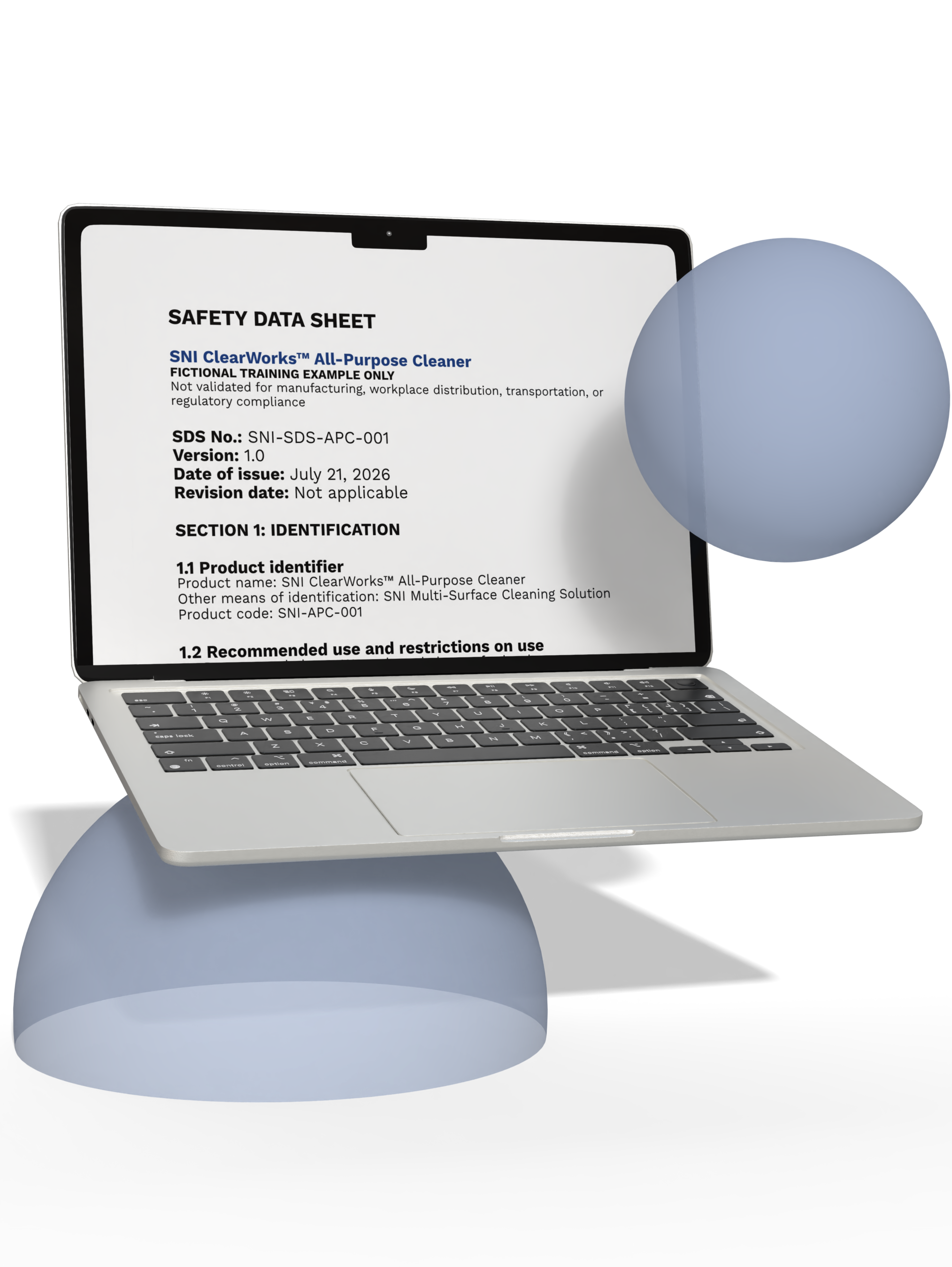
Source Nutraceutical, Inc. (SNI) supports manufacturers, importers, distributors, and chemical suppliers with Canadian Safety Data Sheet (SDS) preparation, hazard classification, bilingual documentation, and WHMIS compliance.
Whether you are launching a new workplace product, entering the Canadian market, updating an existing SDS, or confirming whether a finished product requires an SDS, our team can help translate your product information into clear, compliant documentation.
Canadian SDS Services
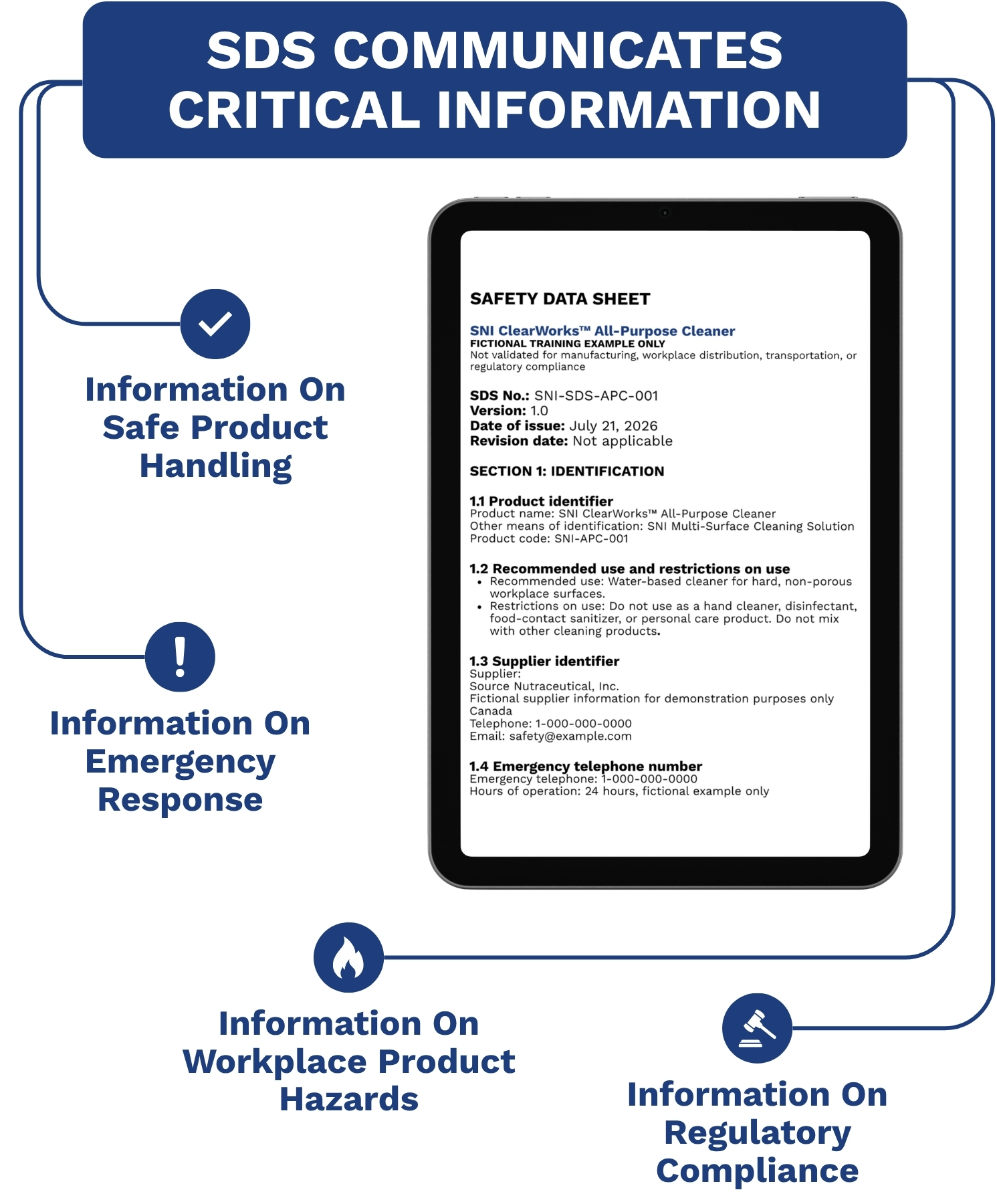
Safety Data Sheets (SDSs) communicate critical information about workplace product hazards, safe handling, emergency response, and regulatory compliance.
Preparing a compliant SDS for the Canadian market requires more than translating an existing document. Each finished product must be assessed under the Hazardous Products Regulations (HPR) to determine whether an SDS is required and, if so, how the product should be classified.
SNI provides practical regulatory support at every stage, helping companies develop accurate bilingual documentation aligned with Canadian WHMIS requirements.
Who We Support
Our SDS services are designed for:
- Manufacturers
- Canadian importers
- Chemical suppliers
- Distributors
- Contract manufacturers
- Private-label companies
- Industrial product manufacturers
- International companies entering Canada
Our SDS Services
SNI supports companies with:
- Finished-product hazard classification
- Canadian SDS preparation
- English and French SDS authoring
- Review of existing Canadian and international SDSs
- Workplace label reviews
- SDS updates following formulation or regulatory changes
- Cross-border SDS assessments
- Canadian WHMIS compliance support
When You Need SDS Support
You may benefit from SDS authoring or review services if you are:
- Launching a workplace product in Canada
- Importing hazardous products
- Reformulating an existing product
- Updating an older SDS
- Expanding from the United States
- Changing suppliers or manufacturing sites
- Unsure whether your product requires an SDS
- Responding to a customer or regulatory request
Common SDS Challenges
Many SDS issues arise because companies:
- Rely on U.S. SDSs without Canadian review
- Assume ingredient hazards automatically apply to the finished product
- Use outdated SDS templates
- Overlook bilingual requirements
- Fail to update documents after formulation changes
- Have inconsistencies between their SDS and workplace labels
Do I Need an SDS
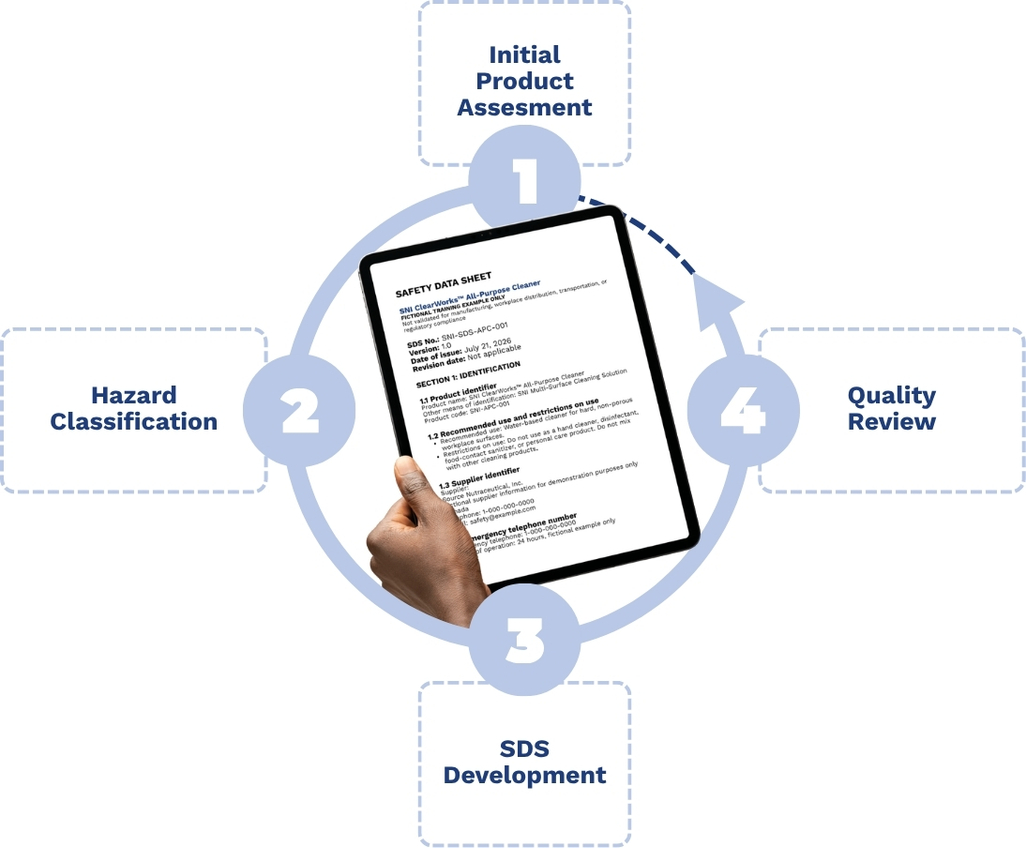
Our SDS Process
Initial Product Assessment
Hazard Classification
SDS Development
Quality Review
Ongoing Support
Why Work with SNI?
SNI brings more than 100 years of collective regulatory and industry experience. Our multidisciplinary team combines regulatory, scientific, quality, and commercial expertise, allowing us to assess not only the SDS itself, but also the broader product and market context in which it will be used.
This integrated approach helps manufacturers, importers, distributors, and private-label brands make clearer decisions, address technical gaps earlier, and move forward with documentation that is practical, defensible, and aligned with their Canadian business objectives.
Need Help with Canadian SDS Compliance?
Whether you are introducing a new workplace product, entering the Canadian market, reviewing an existing SDS, or confirming whether a finished product requires one, SNI can help assess your product and prepare clear, compliant documentation.
Contact our team to discuss your Canadian SDS authoring or compliance requirements.

More About SDS Regulations and Requirements
Canadian SDS Requirements
In Canada, hazardous workplace products are regulated under the Hazardous Products Act (HPA) and Hazardous Products Regulations HPR as part of the Workplace Hazardous Materials Information System (WHMIS).
A compliant Canadian SDS generally requires:
- Assessment of the finished product
- Classification against Canadian hazard criteria
- Standardized 16-section format
- English and French documentation
- Consistency with the supplier workplace label
An existing SDS from another jurisdiction should not automatically be assumed to meet Canadian requirements.
Canadian vs. United States SDSs
Although both Canada and the U.S. base their hazard communication systems on the Globally Harmonized System (GHS), important differences remain.
Canadian SDSs may differ in:
- Hazard classification
- Ingredient disclosure
- Trade secret requirements
- Occupational exposure information
- Regulatory terminology
- English and French language requirements
A U.S. OSHA SDS can often be used as a starting point but should be reviewed before being supplied with products intended for Canadian workplaces.
Who Is Responsible for SDS Compliance in Canada?
Responsibility for SDS compliance generally rests with the supplier placing the hazardous product on the Canadian market. Depending on the supply chain, this may be the manufacturer, Canadian importer, distributor, or private-label company.
The responsible supplier must ensure that the product is correctly classified, the SDS and supplier label meet Canadian requirements, and the required hazard information is available in English and French. Once the product reaches the workplace, the employer is responsible for maintaining SDS access, workplace labelling, worker education, and product-specific training.
FAQ About SDSs and SDS Authoring
Does every product containing chemicals require an SDS in Canada?
No. A product does not require an SDS simply because it contains chemical ingredients. The finished product must first be assessed based on its intended use, applicable exclusions, and the physical and health hazard classification criteria established under the HPR.
Can I use a U.S. SDS in Canada?
Not without a Canadian compliance review. A U.S. OSHA-compliant SDS may require updates to address Canadian hazard classification, bilingual content, supplier identification, regulatory references, composition disclosure, and alignment with the supplier label.
Does a Canadian SDS have to be bilingual?
Yes. Required SDS information for a hazardous product must be available in both English and French. Suppliers may provide one bilingual SDS or two corresponding language versions, provided both communicate equivalent technical and safety information.
Can SNI review an existing SDS?
Yes. Source Nutraceutical, Inc. (SNI) reviews Canadian, U.S., and international SDSs to identify classification, content, language, supplier information, and regulatory gaps. We can also update existing documents to support compliance with Canadian WHMIS and HPR requirements.
How often should an SDS be updated in Canada?
An SDS is not updated according to a fixed renewal schedule. It should be reviewed whenever significant new hazard information becomes available or when changes to the formulation, ingredient concentrations, product format, intended use, or supporting data may affect the existing classification or safety information.
What information is required for SDS authoring?
SDS authoring generally requires the complete formulation, ingredient identities and concentrations, CAS numbers where applicable, raw-material SDSs, physical and chemical property information, toxicological data, intended use, product format, and supplier details. Additional information may be required depending on the product and its potential hazard classification.
What is the difference between SDS authoring and SDS review?
SDS authoring involves developing a new 16-section SDS based on the finished product’s formulation, classification, and supporting technical information. An SDS review evaluates an existing document to determine whether its classification, content, language, supplier information, and regulatory references remain accurate and appropriate for Canada.
Can SNI update an outdated SDS or MSDS?
Yes. SNI can review and update an existing SDS or MSDS to reflect current product information, Canadian regulatory requirements, new hazard data, formulation changes, revised supplier details, or changes to the finished-product classification.
Who is responsible for providing a compliant SDS in Canada?
The supplier placing the hazardous product on the Canadian market is generally responsible for ensuring that the SDS complies with Canadian requirements. Depending on the supply chain, this may be the manufacturer, importer, distributor, or private-label company.