
Supplemented Food
Regulatory Services in Canada
CANADIAN FOOD COMPLIANCE
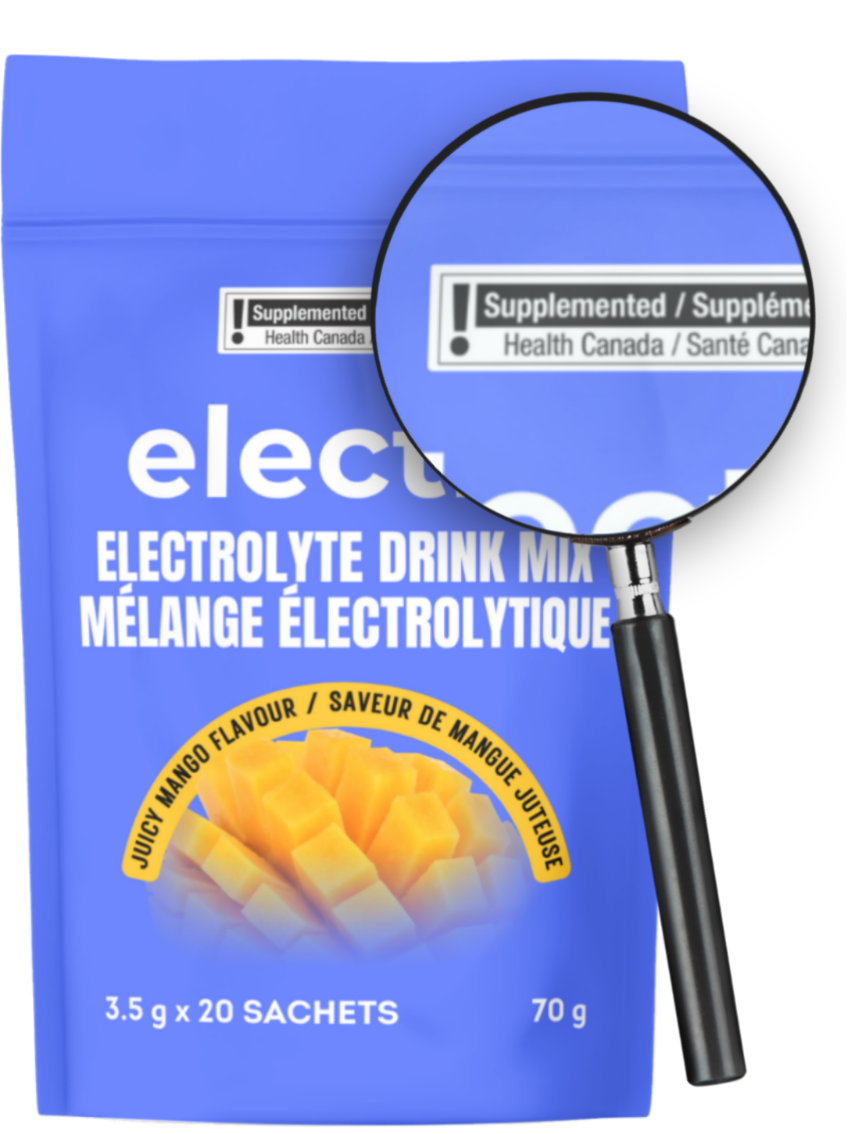
Supplemented foods occupy a distinct regulatory category in Canada. A product must qualify as an eligible food category, use permitted supplemental ingredients within their conditions of use, and meet specialized labelling and claims requirements before it reaches the market.
Source Nutraceutical, Inc. (SNI) helps food and beverage companies evaluate these requirements as one connected commercialization pathway. Our regulatory specialists support product classification, formula and ingredient review, label development, claims assessment, pre-market strategy, and final packaging implementation for the Canadian market.
What Are Supplemented Foods in Canada?
Supplemented foods are prepackaged foods to which one or more permitted supplemental ingredients have been added. These ingredients may include vitamins, minerals, amino acids, or other substances with a physiological effect, such as caffeine.
Unlike conventional fortification, supplementation is governed by Division 29 of the Food and Drug Regulations and Health Canada’s incorporated lists. Those lists establish which food categories may be supplemented, which supplemental ingredients may be used, and the conditions attached to each use.
Classification depends on the complete product—not a single ingredient. Composition, format, intended use, serving presentation, claims and consumer perception can determine whether a product is regulated as a conventional food, supplemented food, natural health product (NHP), or under another pathway.
What Do SNI’s Supplemented Food Regulatory Services Include?
The appropriate scope depends on the product format, formula, claims, packaging and stage of development. SNI supports new product development, Canadian adaptation of products developed for other markets, and compliance assessments for products already formulated or sold.
Classification and Regulatory Pathway Assessment
SNI evaluates the product as a whole to determine the most appropriate Canadian regulatory pathway. We consider its composition, dosage form, intended purpose, directions for use, proposed representations, and how consumers are likely to understand the product.
Our assessment identifies potential classification concerns early, before further investment is made in formulation, packaging, or launch. Where the intended positioning creates tension between food and NHP requirements, our team outlines practical options and their regulatory implications.
Supplemented Food Formula and Category Review
Only certain food categories may be sold as supplemented foods. SNI compares the product format and complete quantitative formula with the current List of Permitted Supplemented Food Categories and the applicable regulatory requirements.
We review serving size, anticipated daily consumption, sources of nutrients, and relevant ingredient interactions across the product’s formula.
If the product does not fit an authorized category, we can assess reformulation opportunities or determine whether a request to add or modify a category should be considered.
Supplemental Ingredient Review
Each supplemental ingredient must be permitted for the relevant food category and used according to its conditions of use.
Ingredient Review Scope
SNI conducts a separate ingredient-level assessment covering:
- Permitted ingredient identity and source
- Minimum and maximum amounts, where applicable
- Amount per serving and expected daily intake
- Restrictions tied to the food category or target consumer
- Required cautionary statements and directions for use
- Ingredients that may be prohibited or require another regulatory route
- Direct and indirect sources of supplemental ingredients within the formula
This review helps identify issues that may be missed when ingredients are assessed individually or against specifications developed for another country. It also establishes the information needed for the Supplemented Food Facts table (SFFt) and associated cautionary labelling.
Supplemented Food Labelling and Artwork Review
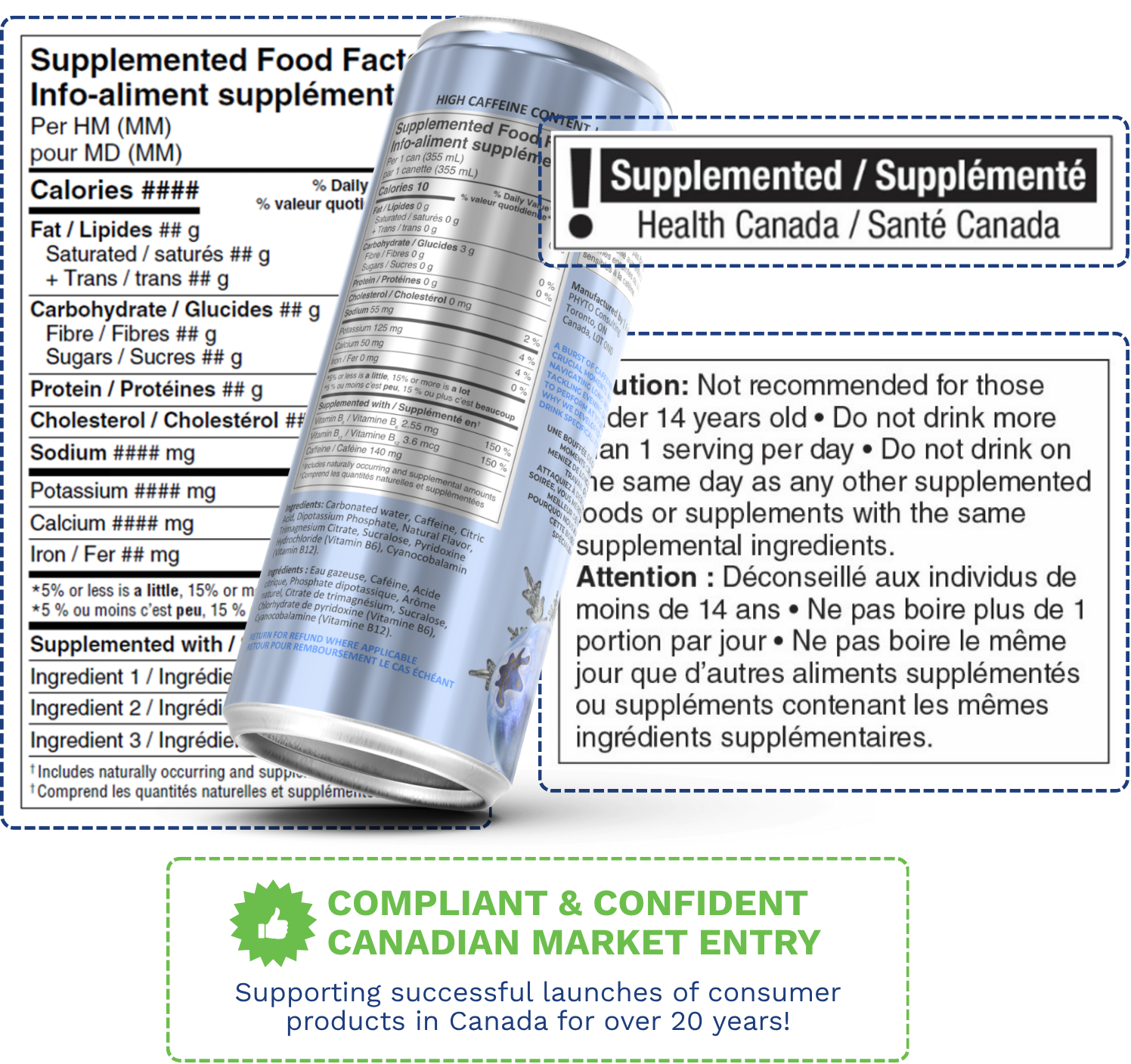
Supplemented foods require a standardized SFFt and, depending on the formula, prescribed cautionary statements and a Supplemented Food Caution Identifier (SFCI).
SNI develops or verifies the SFFt and reviews the complete label for bilingual, ingredient, allergen, nutrition, front-of-package (FOP), and supplemented-food requirements.
Our in-house Creative Services team can then implement the approved content into compliant final artwork.
Supplemented Food Claims Review
Claims warrant a distinct assessment because they can affect product classification, trigger additional label declarations, and create restrictions under the supplemented food framework.
SNI reviews product names, taglines, nutrient content claims, nutrient-function claims, health claims, ingredient-focused statements, and broader marketing language.
Claim Review Scope
The review considers whether each representation:
- Is permitted for the product and ingredient
- Meets compositional and wording conditions
- Is supported by suitable evidence
- Accurately reflects the quantity delivered per serving
- Conflicts with a cautionary statement or target-population restriction
- Creates a therapeutic impression that may alter product classification
- Meets applicable prominence requirements when an identifier or front-of-package symbol appears
Where a proposed claim is unsuitable, our regulatory specialists recommend commercially practical refinements that preserve the intended positioning without overstating the product’s characteristics or benefits.
Pre-Market Submission Strategy
A product that falls within a permitted category and uses authorized supplemental ingredients according to their conditions does not generally require a product-specific licence. A pre-market submission may be appropriate when a company proposes a new category, a new supplemental ingredient, an expanded use or a change to an existing condition.
SNI can evaluate the proposed use, identify evidence expectations and data gaps, and develop a submission strategy for Health Canada. Support may include scientific and regulatory gap assessment, evidence planning, dossier development, response management and strategic communication through the review process.
How Does SNI Support a Supplemented Food Project?
Product Intake and Objective Review
Classification and Gap Assessment
Regulatory Strategy and Recommendations
Label and Claims Development
Final Compliance Review
Why Work with SNI for Supplemented Food Compliance?
Who We Support
SNI supports food and beverage businesses ranging from startups and growing brands to large multinational companies. We work with brand owners, manufacturers, importers, distributors, and product developers bringing supplemented foods to the Canadian market.
Our team provides practical regulatory guidance tailored to your needs. Pricing is customized based on the scope and complexity of each project, ensuring the right level of support for every client.
When to Contact Us
Contact SNI early when you are developing a supplemented food, adapting a product for Canada, changing a formula, preparing label artwork, or planning claims.
We can also help if you are unsure whether your product fits the supplemented food framework, needs cautionary labelling, or may require a pre-market submission.
Bring Your Supplemented Food to the Canadian Market
Whether you are developing a new product, adapting an international formula or resolving concerns with an existing label, SNI can define the requirements and coordinate the work needed for Canadian commercialization.

Request Supplemented Food Support Today
More Information About Supplemented Food Compliance
When Is a Supplemented Food Caution Identifier (SFCI) Required?
The SFCI is required on the principal display panel when a product must carry one or more prescribed cautionary statements because of its supplemental ingredients or their amounts. A product without required cautionary statements is prohibited from displaying the identifier. The formula should therefore be assessed before artwork space and front-panel hierarchy are finalized.
Can a Product Sold in the United States Use the Same Formula and Label in Canada?
Not automatically. Canadian category permissions, ingredient conditions, bilingual requirements, SFFt formatting, cautionary language, and claims rules differ from U.S. requirements. A Canadian adaptation should begin with the formula and intended positioning, not simply a translation of the U.S. label.
Do Supplemented Foods Also Need Front-of-Package (FOP) Nutrition Labelling?
Supplemented foods are generally subject to the FOP nutrition-symbol requirements that apply to other prepackaged foods when thresholds for sodium, sugars, or saturated fat are met or exceeded, unless an exemption applies. The nutrition symbol and an SFCI serve different purposes and may both be required on the same product.
Are Cautionary Statements Required on Every Supplemented Food?
No. They depend on the supplemental ingredients used and, in some cases, the amount present per serving. Certain ingredients trigger statements at any amount, while others do so above specified thresholds.
What is the Difference Between a Nutrition Facts Table (NFt) and a Supplemented Food Facts Table (SFFt)?
The SFFt table is the standardized nutrition declaration required for supplemented foods. In addition to core nutrition information, it contains a distinct “Supplemented with” section that declares supplemental ingredients in the prescribed manner.
What Canadian Requirements Apply when Importing a Supplemented Food?
Imported supplemented foods must comply with the same Canadian formula, claims, and labelling requirements as domestically manufactured products. The Canadian importer may also require a Safe Food for Canadians licence and must meet applicable traceability, preventive control, and import requirements. SNI can assess the product alongside the proposed import and market-entry model.
FAQ About Supplemented Food Services
Does every product with added vitamins or minerals qualify as a supplemented food?
No. The product must belong to a permitted supplemented food category, and the added substance and its use must meet the applicable conditions. Some foods are governed by conventional fortification rules, while others may be excluded or regulated under a different pathway.
Does a supplemented food require an NPN or product licence in Canada?
No. Supplemented foods are regulated as foods and do not receive a Natural Product Number (NPN). A product-specific licence is not generally required when the product fits a permitted category and complies with all applicable ingredient conditions. Health Canada authorization may be needed when the proposed category, ingredient or use is not already permitted.
What information is needed for a supplemented food formula review?
SNI will typically require the complete quantitative formula, ingredient and raw-material specifications, serving size, anticipated daily consumption, product format, target consumer, directions for use, and proposed claims.
What happens if a supplemental ingredient or food category is not currently permitted?
The company may need to reformulate the product, pursue a different regulatory classification or request a new or expanded authorization from Health Canada. SNI can assess the available pathways, identify supporting evidence requirements, and determine whether a pre-market submission is commercially and scientifically viable.
Can SNI review both the formula and finished label?
Yes. Reviewing the formula first allows the label, cautionary statements, claims, and SFFt to be developed from an established regulatory basis. SNI can then complete a final artwork review before launch.