
Medical Device Regulatory
Compliance Services Canada
CANADIAN MEDICAL DEVICE COMPLIANCE

Bringing a medical device to the Canadian market requires a regulatory strategy aligned with its intended use, classification, evidence, quality requirements, labelling, and supply chain activities.
Source Nutraceutical, Inc. (SNI) supports manufacturers, importers, distributors, private-label companies, and innovators with medical device classification, Medical Device Licence (MDL) and Medical Device Establishment Licence (MDEL) support, quality systems, clinical evidence, labelling, and post-market compliance to help move products toward commercialization in Canada.
Canadian Medical Device Regulations
Health Canada regulates medical devices according to their intended use and level of risk. Devices are classified from Class I, representing the lowest risk, through Class IV, representing the highest risk.
The regulatory pathway depends on both the device classification and the activities performed by the company. Class II, III, and IV devices generally require an MDL before they can be imported or sold in Canada. MDEL requirements apply to Class I manufacturers and to importers and distributors of medical devices across all classes, subject to applicable exemptions.
SNI assesses these requirements as part of the broader commercialization strategy so that device classification, licensing, evidence, quality systems, claims, labelling, and post-market responsibilities are considered together.
What Do SNI's Medical Device Regulatory Services Include?
The scope of a medical device regulatory project depends on the device, intended use, risk classification, supporting evidence, company activities, and stage of commercialization.
Combination and Borderline Product Assessments
Products that combine medical devices with drug or natural health (NHP) product characteristics may fall under more than one Canadian regulatory framework.
SNI assesses the product’s components, intended use, claims, directions for use, and principal mechanism of action to determine the most appropriate regulatory pathway and whether medical device licensing alone is sufficient.
Resolving the product’s regulatory status early helps establish the applicable classification, licensing, evidence, quality, and labelling requirements. It can also reduce the risk of pursuing the wrong submission pathway or having to revise the product, claims, or documentation later in development.
Medical Device Classification and Regulatory Strategy
A successful Canadian regulatory strategy begins with determining how Health Canada is likely to classify the device and which requirements apply.
Scope of Support
SNI supports:
- Medical device classification assessments
- Regulatory pathway determination
- Product development and regulatory planning
- Regulatory feasibility assessments
- Intended use and indications-for-use review
- Claims assessments
- Regulatory gap and risk assessments
- Evidence requirement assessments
- Regulatory intelligence and strategic consulting
Our team considers the device technology, intended users, clinical purpose, duration and manner of use, level of invasiveness, risk profile, claims, and other relevant characteristics when determining the appropriate Canadian pathway.
Medical Device Licence (MDL) Applications
Manufacturers of Class II, III, and IV medical devices generally require an MDL before the device can be imported or sold in Canada.
Scope of Support
SNI supports:
- New Class II, III, IV MDL applications
- MDL amendments
- Private-label medical device licence applications and amendments
- Health Canada submission preparation
- Regulatory correspondence
- Deficiency response management
- Supporting evidence assessment
- Licence maintenance and regulatory change assessments
The level of information required increases with device risk. For example, Class II manufacturers attest that they have objective evidence supporting safety and effectiveness, while Class III applications require summaries of the supporting studies and Class IV applications require clinical data relied upon to establish safety and effectiveness.
Medical Device Establishment Licence (MDEL) Support
An MDEL applies to certain establishments involved in importing or distributing medical devices in Canada and to certain Class I manufacturers.
Scope of Support
SNI supports:
- New MDEL applications
- MDEL amendments and notifications
- Annual Licence Review (ALR) support
- Importer and distributor regulatory assessments
- Manufacturer and supplier list updates
- Required procedure development
- MDEL compliance assessments
- Inspection readiness
MDEL holders must maintain appropriate procedures and records for activities such as complaints, recalls, distribution records, and other applicable regulatory responsibilities.
Medical Device Labelling and Claims Compliance
Medical device labels must accurately communicate the information required under the Medical Devices Regulations and reflect the device’s intended use, safety information, and performance.
Scope of Support
SNI supports:
- Medical device label compliance reviews
- Instructions for Use reviews
- Mandatory labelling assessments
- Intended use and claims review
- Warnings, precautions, and directions assessment
- Packaging compliance review
- Sterile-device labelling considerations
- Translation coordination
- Regulatory review of promotional materials
For devices sold to the general public, specified mandatory information must generally appear in both English and French. Other medical devices may be labelled in either official language, with directions in the other official language made available upon request where applicable.
Where Creative Services support is required, SNI can also coordinate compliant label content with final packaging artwork.
Clinical Evidence & Literature Reviews
All medical devices sold in Canada must have appropriate evidence supporting their safety and effectiveness. The nature and extent of clinical evidence required depends on the device classification, intended use, technology, risks, and available supporting information.
Scope of Support
SNI supports:
- Clinical evidence strategy
- Clinical literature reviews
- Evidence gap assessments
- Clinical study feasibility
- Protocol development
- Clinical investigation planning
- Safety and performance evidence documentation
- Clinical data review and interpretation
- Investigational Testing Authorization strategy
- ITA application preparation and support
An Investigational Testing Authorization (ITA) is required when an unlicensed Class II, III, or IV device is imported or sold in Canada for investigational testing involving humans.
Quality Management Systems and MDSAP Support
Manufacturers of Class II, III, and IV medical devices must maintain an ISO 13485 quality management system certified by a Health Canada-recognized Medical Device Single Audit Program (MDSAP) auditing organization as part of Canadian MDL requirements.
Scope of Support
SNI supports:
- Quality Management System (QMS) assessments
- ISO 13485 implementation support
- MDSAP readiness assessments
- QMS gap analyses
- Standard Operating Procedure (SOP) development
- Document and record-control systems
- Corrective and preventive action processes
- Internal quality-system preparation
- Regulatory inspection readiness
This allows quality-system requirements to be considered alongside the regulatory submission rather than addressed separately later in the commercialization process.
Post-Market Compliance and Lifecycle Support
Medical device regulatory obligations continue after authorization.
Scope of Support
SNI supports:
- Complaint-handling procedures
- Mandatory incident reporting
- Recall procedures and execution support
- Distribution record requirements
- Foreign risk notification procedures
- Summary report support
- Issue-related safety and effectiveness analyses
- Licence amendments and maintenance
- Significant-change assessments
- Product and labelling modifications
- Regulatory change management
- Ongoing lifecycle compliance
Health Canada’s post-market framework includes complaint and incident reporting, recall requirements, foreign risk notifications for applicable Class II to IV devices, and summary-report obligations for Class II, III, and IV licence holders.
Our Medical Device Regulatory Consulting Process
Device Classification and Regulatory Assessment
Regulatory Strategy and Gap Assessment
Documentation and Submission Preparation
Health Canada Review Support
Post-Market and Lifecycle Support

Why Work with SNI for Supplemented Food Compliance?
Who We Support
SNI partners with organizations of all sizes, from global leaders and established brands to new and emerging businesses. Whether you are scaling an existing portfolio or navigating Health Canada’s medical device requirements for the first time, we provide tailored guidance, hands-on support, and regulatory education to help you make informed decisions at every stage.
When to Contact Us
You should engage SNI at any stage of the Canadian medical device lifecycle, whether you need to confirm product classification and regulatory pathways, or prepare MDL, MDEL, or ITA applications for market entry. Companies also reach out to us to build robust quality systems like ISO 13485, manage Health Canada communications and deficiency responses, and maintain ongoing post-market compliance for device modifications, recalls, and licence renewals.
Bring Your Medical Device to the Canadian Market
Whether you are developing a device, entering the Canadian market, or managing an existing licensed portfolio, SNI can help. Share your product details, development stage, and commercialization plans with us, and our regulatory team will assess your requirements.
From single deliverables to full commercialization support (spanning classification, licensing, quality systems, labelling, MDEL compliance, and post-market care) we tailor our scope to align directly with your business goals.

Request Medical Device Support Today
More Information About Canadian Medical Device Compliance
What is the difference between an MDL and an MDEL?
A Medical Device Licence (MDL) authorizes a manufacturer to import or sell a specific Class II, III, or IV medical device in Canada.
A Medical Device Establishment Licence (MDEL) applies to certain establishments involved in importing or distributing medical devices and to certain Class I manufacturers.
Depending on the device and the company’s role in the Canadian supply chain, an MDL, MDEL, both, or an applicable exemption may need to be considered.
Medical device compliance for foreign manufacturers
Foreign manufacturers must determine both the regulatory status of their device and how it will enter the Canadian supply chain.
Class II, III, and IV devices generally require an MDL held by the manufacturer. Importers and distributors may also require an MDEL depending on their activities and the applicable exemptions.
SNI can assess the proposed Canadian distribution model alongside device classification, licensing, labelling, and quality requirements to help establish a compliant market-entry strategy.
Medical device changes after licensing
Changes to an authorized device can trigger additional regulatory obligations.
For Class III and IV devices, a significant change that could reasonably be expected to affect safety or effectiveness may require an MDL amendment before the modified device is sold. Changes to device class, manufacturer information, and other licence details may also require regulatory action.
SNI can assess proposed product, manufacturing, software, material, sterilization, intended-use, or labelling changes and determine the appropriate Health Canada pathway.
How do I know whether my product is regulated as a medical device in Canada?
Whether a product is considered a medical device depends on factors such as its intended use, mechanism of action, claims, technology, and how it is represented to users.
SNI can assess the product and proposed claims to determine whether it falls within Health Canada’s medical device framework and identify any potential classification or regulatory boundary issues before commercialization.
How do I know what class my medical device is in Canada?
Health Canada classifies medical devices as Class I, II, III, or IV according to risk-based classification rules. Classification depends on factors such as intended use, invasiveness, duration of use, anatomical location, technology, and level of risk.
SNI can assess the device and proposed claims to determine the likely Canadian classification and applicable regulatory pathway.
Does every medical device need a licence in Canada?
No. Class I medical devices do not require an MDL. Manufacturers of Class II, III, and IV devices generally require an MDL before the device can be imported or sold in Canada. Separate MDEL requirements may apply depending on the company’s activities.
Does my medical device need MDSAP certification?
Manufacturers holding Canadian MDLs for Class II, III, and IV devices must meet applicable ISO 13485 quality-system requirements through certification issued by a Health Canada-recognized MDSAP auditing organization.
Which products are regulated as medical devices in Canada?
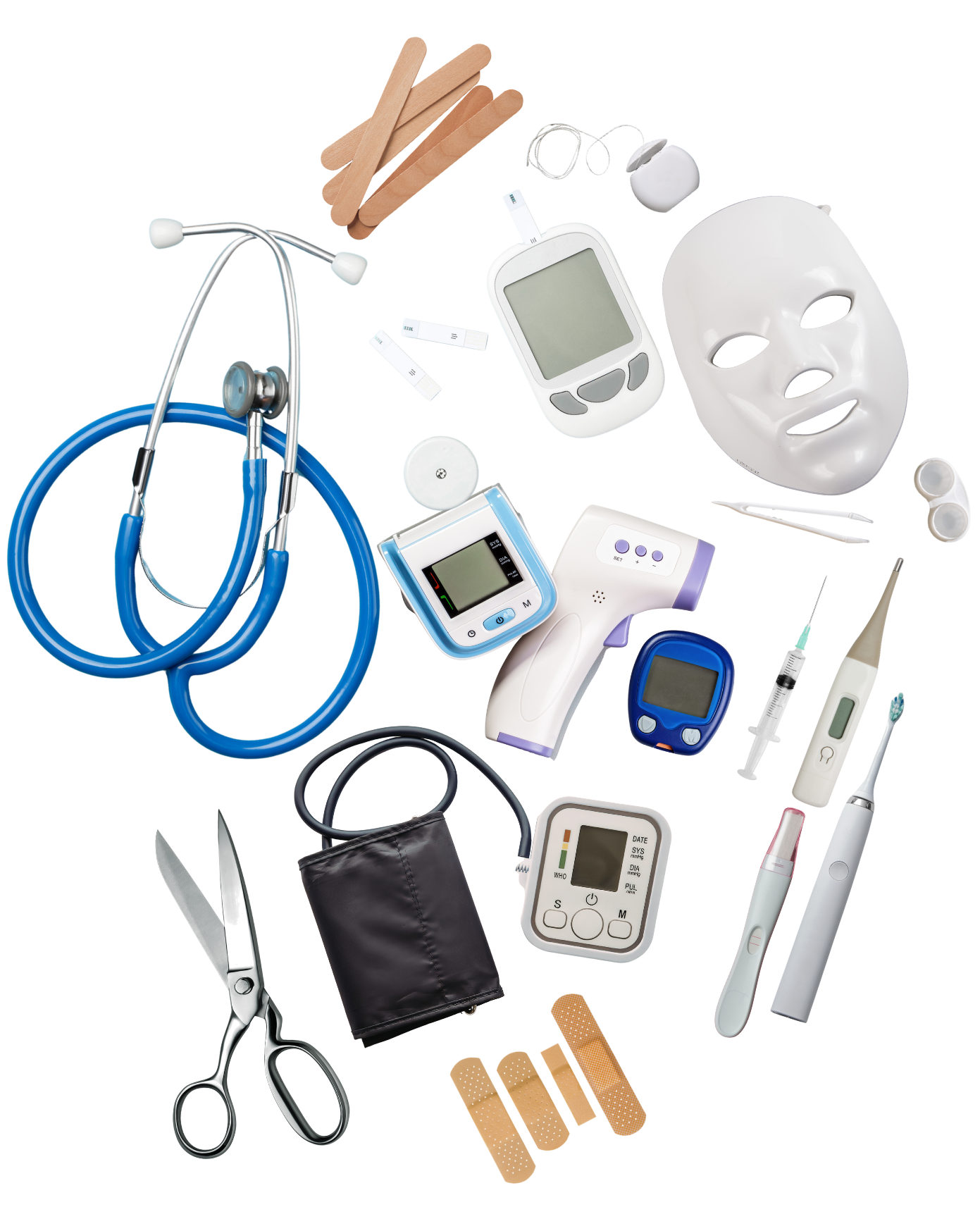
A product may be regulated as a medical device when its intended use is to diagnose, prevent, monitor, treat, or mitigate a disease or health condition, or to restore, correct, or modify a body structure or function. Common examples include:
- Bandages, examination gloves, and manual wheelchairs
- Contact lenses, hearing aids, pregnancy tests, and blood pressure monitors
- Infusion pumps, ventilators, and blood glucose monitoring systems
- Pacemakers, implantable defibrillators, and other surgical implants
- Diagnostic imaging and laboratory testing equipment
- Certain lasers, red-light therapy devices, and aesthetic treatment equipment
- Certain medical software, mobile applications, and artificial intelligence systems
- Contraceptive devices, such as condoms and intrauterine devices
A product’s classification depends on its intended use, medical claims, design, and mechanism of action. Similar-looking products may be regulated differently, so classification should be confirmed before licensing, importing, or advertising the product in Canada.
My product is not regulated as a medical device in the U.S. Can I sell it as a non-medical device in Canada?
Not necessarily. Canada and the United States apply separate definitions, classification rules, and regulatory requirements. Health Canada will consider the product’s intended use, mechanism of action, labelling, advertising, and medical claims, regardless of how the product is regulated in the U.S. A product treated as a general wellness or consumer product by the FDA may still qualify as a medical device in Canada.
Before selling or importing the product, SNI can conduct a Canadian classification assessment, determine the applicable regulatory pathway, and identify any licensing, labelling, or establishment requirements. This helps prevent border delays, marketplace removals, and enforcement action after launch. Contact SNI to confirm your product’s Canadian classification before entering the market.
Can I sell my medical device on Amazon or through another online store without an MDL or MDEL?
Selling online does not exempt a medical device from Health Canada’s licensing requirements. Class II, III, and IV medical devices must hold an active MDL before they can be imported or sold in Canada. Class I devices do not require an MDL, but the manufacturer, importer, or distributor may require an MDEL.
A retailer selling directly to consumers may be exempt from holding an MDEL when the device is obtained through an appropriately licensed Canadian supply chain. However, an online seller that imports devices into Canada, distributes them to other businesses, or performs other regulated activities may require an MDEL. Marketplace approval from Amazon or another platform does not replace Health Canada authorization.
My product was flagged by Amazon or Health Canada for non-compliance. What should I do?
Pause further sales or distribution, preserve the notice and supporting records, and avoid making unsupported changes before the issue has been assessed. The appropriate response may involve confirming the product’s classification, verifying its MDL or MDEL status, reviewing claims and labelling, addressing importer or manufacturer requirements, and preparing corrective actions or a recall strategy where necessary.
SNI can assess the compliance issue, identify the regulatory gaps, communicate with Amazon or Health Canada, and prepare the documentation needed to support corrective action and product relisting. Acting quickly with a clear, evidence-based response can reduce further disruption and help establish a defensible path back to market. Contact SNI for priority medical device compliance support.
When should you engage a Canadian medical device regulatory consultant?
Companies commonly engage SNI when:
- Developing or classifying a medical device, including determining whether a product is regulated as a medical device, confirming classification, defining intended use and claims, and establishing the appropriate Canadian regulatory pathway.
- Preparing for Canadian market entry, including MDL, MDEL, private-label applications, clinical evidence assessments, ITAs, labelling, and Instructions for Use.
- Building or strengthening quality and compliance systems, including ISO 13485 implementation, MDSAP readiness, MDEL inspection preparation, and required procedures.
- Managing regulatory submissions and Health Canada interactions, including application preparation, deficiency responses, supporting documentation, and regulatory correspondence.
- Supporting post-market and lifecycle compliance, including device modifications, MDL amendment assessments, complaint and recall procedures, post-market reporting, and ongoing licence maintenance.
Early regulatory planning can help identify requirements before they create avoidable development, testing, submission, or commercialization delays.
FAQ About Medical Device Services
How much do medical device regulatory services cost in Canada?
The cost depends on the device classification, regulatory pathway, scope of work, complexity of the supporting evidence, and whether additional services such as labelling, quality-system support, clinical evidence review, or post-market compliance are required.
SNI reviews the project requirements before providing a customized scope and quote. This allows the proposed fees to reflect the actual regulatory work required rather than applying a one-size-fits-all price.
How long does medical device regulatory approval take in Canada?
Timelines vary based on the type of submission, device classification, completeness of the application, and Health Canada’s review process. Class II, III, and IV MDL applications are subject to different review timelines, while MDEL applications follow a separate process.
SNI helps clients understand the expected regulatory timeline at the outset and can support application preparation, deficiency responses, and Health Canada correspondence to help keep the process moving efficiently.
Can SNI prepare a Medical Device Licence (MDL) application?
Yes. SNI supports new and amended Class II, III, and IV MDL applications, including regulatory strategy, application preparation, supporting documentation, evidence assessment, labelling review, and Health Canada correspondence.
For higher-risk devices, our team can also help organize the scientific and clinical evidence required to support the application.
Can SNI help with medical device labels and claims?
Yes. SNI can review medical device labels, Instructions for Use, intended-use statements, claims, mandatory information, language requirements, warnings, directions, and supporting promotional materials against applicable Canadian requirements.
Can SNI help with clinical evidence for a Medical Device Licence (MDL)?
Yes. SNI can assess existing clinical evidence, identify potential evidence gaps, support literature reviews and clinical strategy, and help determine whether additional device-specific clinical evidence may be required. Health Canada’s evidence expectations increase with device risk and depend on the intended use, technology, available evidence, and uncertainties associated with the device.
Can SNI help with a Medical Device Establishment Licence (MDEL) application?
Yes. SNI can support new MDEL applications, amendments, Annual Licence Reviews (ALR), required procedures, manufacturer and supplier information, compliance assessments, and inspection readiness.
Why choose SNI for medical device regulatory compliance in Canada?
SNI combines regulatory, quality, clinical, and creative expertise within one organization, allowing medical device projects to be supported across multiple stages of Canadian commercialization.
Every regulatory project undergoes quality control through a secondary peer review, helping reduce the risk of gaps, omissions, or inconsistencies. SNI is also a trusted partner to established companies and major brands while providing new and emerging device companies with the hands-on guidance and regulatory education needed to navigate Health Canada’s requirements with greater confidence.