
visit sniclinic dot com here

How to Build a Packaging Design System That Scales Across Multiple SKUs

How to Build a Packaging Design System That Scales Across Multiple SKUs

Designing one beautiful package is exciting. Designing 100 that look just as good, work together on the shelf, and accommodate different products, sizes, and regulatory requirements? That takes a little more planning.

As brands grow, packaging becomes more than an individual design project. Every new flavour, product extension, or market introduces another opportunity to strengthen your brand identity or unintentionally dilute it.

That is where a packaging design system comes in. A well-developed system gives your brand a recognizable visual identity while allowing individual products to have their own personality. More importantly, it creates a scalable foundation that makes introducing new SKUs easier, faster, and considerably less complicated.

Show Table of Contents

What Is a Packaging Design System?

Think of a packaging design system as your brand's creative blueprint. It establishes the visual rules that bring your packaging portfolio together, including typography, colour palettes, imagery, layout, and information hierarchy.

Rather than designing every package from scratch, your team works from an established framework that can be adapted to different products, formats, and markets. The objective is not to make every package look identical. It is to make every package look unmistakably yours.

A strong packaging design system should be recognizable enough to establish brand consistency, yet flexible enough to accommodate everything from your flagship product to that exciting new flavour your development team just introduced.

Why Individual Package Designs Become Difficult to Scale

When Every Package Becomes Its Own Design Project

One SKU is manageable, but ten require coordination. By the time you reach 50 or 100, designing each package independently can become an expensive exercise in keeping everything consistent. Without an established design system, small variations in typography, spacing, colours, and layouts can gradually create inconsistencies across a product portfolio. 

These differences might seem minor when reviewing individual artwork files, but they become much more noticeable when products appear together on a retail shelf. 

Your packaging should look like a family, not a collection of distant relatives. A cohesive design system helps shoppers recognize your products at a glance, even when individual SKUs feature different colours, flavours, or imagery. 

The First Package Is Not Always the Best Blueprint

Your first product might have a short name, minimal mandatory information, and plenty of room for creative expression. Then comes the next SKU, featuring a longer product name, additional claims, more ingredients, and a smaller package. Suddenly, that perfectly balanced original design is looking a little crowded.

This is one of the most common challenges in packaging expansion. A design created around the simplest product may struggle to accommodate more complicated variations.

Instead, an effective packaging design system should be developed with the most demanding products in mind. Testing longer names, extensive ingredient lists, additional mandatory information, and smaller formats early helps establish a framework that can accommodate future products without compromising the design.

How to Create a Clear Multi-SKU Packaging Architecture

Establish What Remains Consistent Across Every SKU

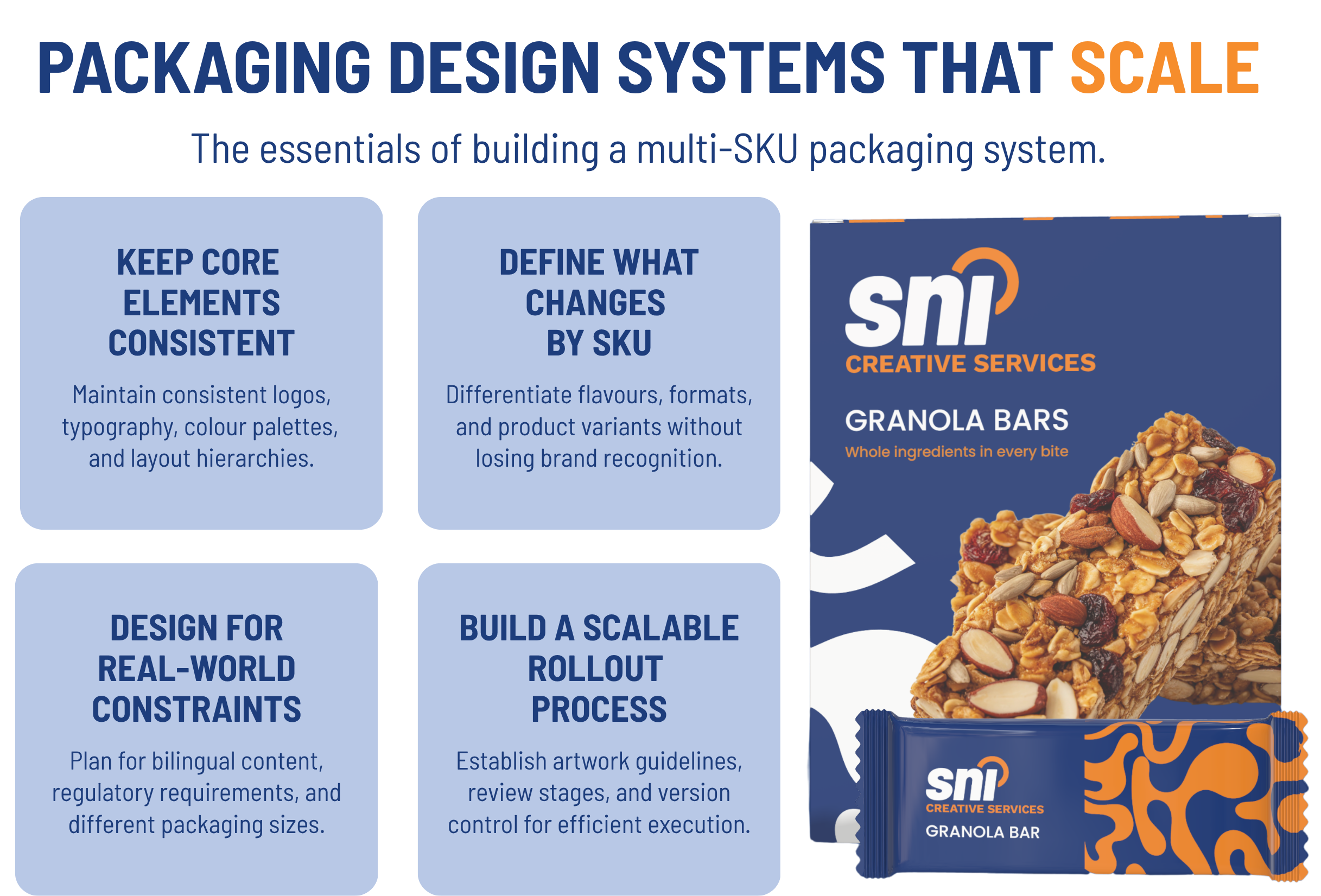
Before introducing product variations, identify the elements that should remain consistent across your portfolio. These typically include your logo, primary colour palette, typography, overall layout, and information hierarchy. Consider what makes your brand recognizable even when individual product names or imagery are removed.

These elements form the visual foundation of your packaging system. They should be consistent enough to create a unified brand identity while leaving room for individual products to stand out.

Give Each Product Its Own Personality

Consistency does not mean every package needs to look the same. Different flavours, product types, and varieties should be easy for shoppers to distinguish. Colour coding, photography, illustrations, icons, and product-specific messaging can help create that distinction.

For example, a beverage brand might maintain the same logo placement, typography, and overall composition while assigning each flavour a different colour and illustration. The result is a product family that feels cohesive without making customers squint at the labels to figure out which flavour they are holding.

The key is to establish clear rules for which elements can change and how those variations should be applied.

Build a Logical Brand and Product Hierarchy

For brands with multiple product families, sub-brands, or categories, a single packaging layout may not be sufficient.

Your design system should establish how the master brand relates to individual product lines and SKUs. This includes defining the prominence of brand names, product names, flavour descriptions, and other distinguishing information.

A clear hierarchy helps customers understand the relationship between products while allowing different collections to maintain their own visual identities.

How Should the System Account for Future Products?

Design for the Most Complicated SKU, Not Just the Prettiest One

It is tempting to build a packaging system around the product that offers the most creative freedom. Unfortunately, that product is rarely the one that puts your design system to the test. 

Before finalizing your framework, challenge it with realistic variations. Consider the longest product name, the most extensive ingredient list, the greatest amount of mandatory information, and the smallest available package. 

If your design can accommodate these scenarios without sacrificing readability or visual balance, it is much better positioned to support future expansion. 

Make the Design Work Across Different Packaging Formats

A packaging system should also adapt to different shapes, sizes, and formats.

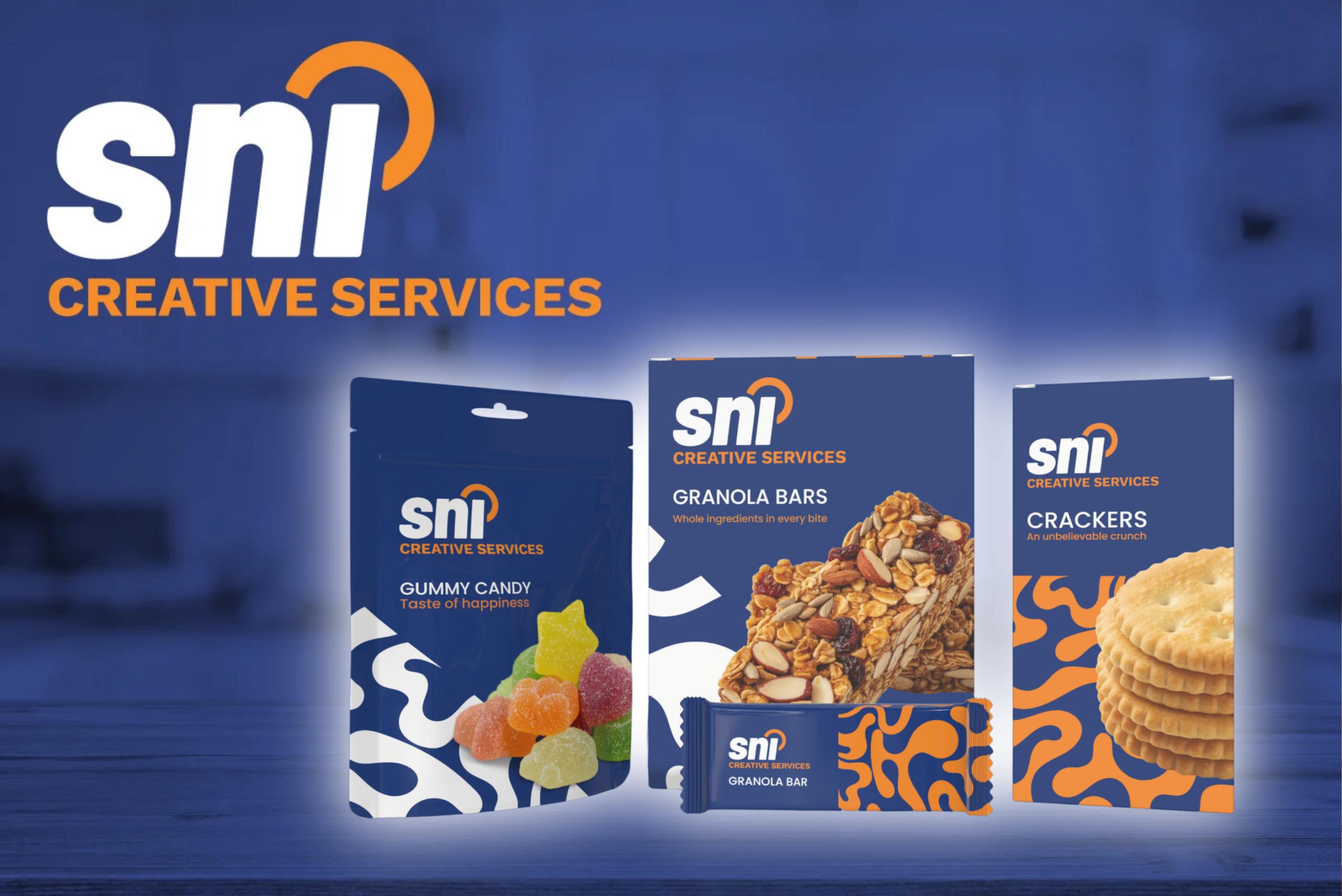
Consider a granola bar brand. Its packaging portfolio might include individual wrappers, multipack cartons, family-sized boxes, and variety packs. Although these formats offer very different amounts of design space, they should still feel connected.

A scalable packaging system establishes how core visual elements translate across formats, including adjustments to logo placement, typography, imagery, and information hierarchy. It should also anticipate potential product extensions, such as introducing granola clusters or snack bites under the same brand.

Establish Rules Without Restricting Creative Flexibility

A packaging design system should provide direction, not eliminate creative freedom.

If every element is rigidly fixed, introducing new products can become unnecessarily difficult. If everything is flexible, maintaining consistency becomes equally challenging. The best systems find a balance. They protect the visual elements that make a brand recognizable while allowing designers to explore new creative possibilities within an established framework.

Think of it as giving your creative team a well-stocked toolbox rather than a colouring book.

How Should Regulatory Requirements Be Integrated Into the Design?

Plan for Bilingual and Category-Specific Information

For products entering the Canadian market, language requirements should be considered early in the design process. Most mandatory information on consumer prepackaged food labels must appear in both English and French, subject to applicable exemptions.

Requirements also vary by product category, and additional provincial requirements may apply. French translations can require more space than their English equivalents, creating challenges when bilingual content is introduced after the creative layout has been finalized.

A packaging system developed with these requirements in mind can accommodate multilingual content without forcing major changes to the design. Other considerations may include preparation instructions, storage conditions, ingredient declarations, and product-specific mandatory statements.

Make Room for Claims, Warnings, and Mandatory Information

Depending on the product category and intended market, packaging may need to accommodate regulated elements such as:

Some of these elements are subject to prescribed formatting, size, legibility, or placement requirements. Integrating them into the packaging system early helps protect both the creative concept and the space needed for compliant labelling.

After all, nobody wants to discover at the final artwork stage that a mandatory statement needs to occupy the space reserved for the hero illustration.

Account for Canadian and U.S. Packaging Differences

Expanding into a new market can introduce an entirely new set of packaging considerations.

Canada and the United States have different labelling frameworks, including requirements for language, nutrition information, product identifiers, claims, and mandatory statements. For brands selling in both markets, a scalable design system should anticipate these differences and establish how market-specific information will be incorporated.

This may involve developing separate artwork versions while maintaining a consistent visual identity. Planning for cross-border requirements early can help reduce extensive redesigns when entering additional markets.

How Do You Manage a Multi-SKU Packaging Artwork Rollout?

Creating the design system is only half the equation. Applying it consistently across dozens or hundreds of SKUs requires an equally organized production process.

Create Packaging Artwork Guidelines

Once your design system has been established, document the rules that govern how it should be applied. 

Packaging artwork guidelines should define typography, colours, imagery, layouts, information hierarchy, and the approved use of brand assets. They should also explain how the system adapts to different product families, packaging sizes, and markets. 

These guidelines become a practical reference for designers, artwork production teams, and other stakeholders involved in future product launches. The clearer the instructions, the less room there is for creative interpretation where consistency matters. 

Coordinate Creative, Regulatory, Translation, and Production Reviews

A multi-SKU rollout often involves several teams, each reviewing different aspects of the packaging.

Creative teams assess visual consistency and design execution. Regulatory specialists review applicable labelling requirements. Translation teams verify multilingual content, while production specialists assess technical artwork specifications and print readiness. Establishing defined review stages and approval responsibilities helps keep the process organized.

A centralized artwork tracker can also help monitor SKU status, outstanding revisions, deadlines, and final approvals. This becomes especially valuable when a single change, such as an updated brand element or mandatory statement, affects multiple SKUs.

Maintain Version Control and Final Artwork Quality Control

When managing a large packaging portfolio, version control is essential.

A standardized file naming system should identify the product, variety, size, intended market, revision date, and version number. Combined with a centralized SKU tracker, this helps teams identify approved artwork and avoid confusion between outdated drafts and final production files.

Before artwork is released to print, final quality control should confirm that the correct approved version is being used and that relevant content, design elements, and production specifications have been reviewed.

Because discovering a packaging error after 50,000 labels have been printed is considerably less entertaining than catching it beforehand.

When Should a Packaging System Be Extended or Redesigned?

Recognize When Your Existing System Is No Longer Working

Even the strongest packaging systems need occasional adjustments.

As your portfolio expands, you may encounter new product formats, categories, or regulatory requirements that the original design did not anticipate. You might also notice that packaging across your portfolio has become inconsistent, or that new product launches require increasingly complicated workarounds. These are signs that your system may need to be refined.

However, an update does not necessarily mean starting from scratch. Identifying the specific limitations of the existing system can help determine whether targeted improvements or a broader redesign would be more appropriate.

Evaluate Consistency and Artwork Efficiency

A packaging system should be assessed not only by how it looks, but also by how effectively it supports your portfolio.

Review completed artwork for visual consistency, recurring errors, revision frequency, and approval timelines. If certain layouts consistently require extensive adjustments, or particular packaging formats create repeated challenges, these patterns can help identify opportunities for improvement.

Regular evaluation allows your packaging system to evolve alongside your business rather than becoming an obstacle to growth.

Refresh the Design Without Losing Brand Recognition

Updating a packaging system presents an opportunity to improve its functionality and visual appeal. However, it is important to preserve the elements that customers already associate with your brand.

Recognizable logos, colour palettes, typography, and visual cues may still have considerable value, even when other aspects of the design need improvement. A thoughtful refresh builds on these strengths while addressing the limitations of the existing system.

The goal is to make your packaging better, not make your customers wonder where their favourite product went.

Final Remarks

A successful packaging design system is not about making every SKU identical. It is about giving every product a clear place in your brand’s story. Defining what stays consistent and what can change creates a framework that supports new products without losing the visual identity that connects your range.

As you expand, keep the practical details in view; test demanding SKUs early, plan space for market-specific labelling, document your artwork guidelines, and establish clear review and approval responsibilities. Together, these steps help turn a creative framework into a system your team can use consistently, from the first concept to the final production file.

Whether your next launch adds one new flavour or an entirely new product line, the goal remains the same: packaging that feels unmistakably yours and leaves room for what comes next. Build the system for the portfolio you want to grow into, not just the products you have today.

How Can SNI Support Multi-SKU Packaging Design?

Great packaging takes more than a good eye for design. It requires a creative strategy that brings your products together, the flexibility to accommodate future growth, and the technical expertise to make it all work.

SNI Creative Services combines creative design, regulatory expertise, and production support to help brands build cohesive packaging portfolios that look great on shelves and work just as well behind the scenes.

Packaging Design Systems That Look Good and Work Hard

SNI Creative Services develops scalable packaging design systems that balance creative expression with brand consistency. From initial concepts to individual SKU execution, we help brands create distinctive, cohesive packaging that can adapt to new products, formats, and markets.

Creative Thinking Meets Regulatory Expertise

Great packaging should look good and meet regulatory requirements. Our creative and regulatory teams work together to integrate applicable Canadian, U.S., and international labelling requirements into the design process, helping minimize revisions without compromising your brand identity.

High-Volume Artwork Adaptation and Portfolio Management

Managing 100 SKUs should not mean managing 100 different design challenges. SNI supports high-volume artwork adaptation and production across multiple products, formats, and markets, using standardized workflows to maintain consistency, accuracy, and efficiency.

Book an introductory call using the following form:

Great! We’ve received your information. Our team will reach out shortly.

Food Claim Substantiation in Canada: FAQ

Packaging design focuses on the appearance and functionality of an individual product package. A packaging design system establishes the broader visual principles, layouts, and guidelines that can be applied consistently across an entire product portfolio. It allows individual SKUs to maintain their own identity while remaining recognizable as part of the same brand. 

Start with a documented packaging design system that defines typography, colour palettes, imagery, layout, and information hierarchy. Establish which elements must remain consistent and which can change between products. Applying these guidelines across all artwork helps create a cohesive brand identity while accommodating different product variations. 

Product-specific elements such as flavour colours, illustrations, photography, product names, and marketing copy can vary between SKUs. Core elements, including logo placement, typography, layout principles, and overall visual language, should remain consistent enough to preserve brand recognition. 

A redesign may be appropriate when packaging has become inconsistent, difficult to adapt to new products, or no longer reflects the brand's positioning. Changes in packaging formats, product categories, or target markets can also create a need for updates. In some cases, refining the existing system may be more effective than undertaking a complete redesign. 

Share the Post:

Related Posts

The content on this website, including information presented in this post, is provided for general informational purposes only and does not constitute legal, regulatory, or professional advice. While efforts are made to ensure accuracy, laws and regulations vary by jurisdiction and may change over time. Readers should not rely on this information as a substitute for advice from qualified legal or regulatory professionals. We disclaim any liability for actions taken based on this content, and users are encouraged to seek guidance specific to their circumstances.

Join Our Newsletter

Loading...