How Are Functional Beverages Regulated in Canada?Â
Not sure how your functional beverage is regulated in Canada? Learn how classification, ingredients, claims, labelling, and pre-market requirements can affect your path to market.

Protein powders sold in Canada may be regulated as conventional foods, supplemented foods, or natural health products (NHPs). The correct pathway depends on the finished product’s composition, representation, format, and history of use. It cannot be determined from the presence of protein or the powdered format alone.Â
Â
Classification is the starting point for understanding protein powder regulations in Canada. It determines whether the product requires a Natural Product Number (NPN), which ingredients and claims are permitted, what labelling format applies, and which licensing and quality requirements must be met.Â
Health Canada addresses powdered products in its guidance on the food–natural health product interface. Because powders are commonly sold as foods and NHPs, format is not the primary classification factor. Instead, Health Canada considers four principal factors:Â
Â
Â
These factors are assessed collectively. A flavoured powder represented as an everyday shake or source of dietary protein may have characteristics consistent with a food. A measured-dose powder promoted for muscle building or increased protein synthesis may have stronger NHP characteristics. Added vitamins, mineral nutrients, amino acids, or other supplemental ingredients may require further assessment to determine whether the product is a conventional food, supplemented food, or NHP.Â
Â
A scoop, serving size, or added vitamin does not independently determine the pathway. For a broader explanation, see Food or NHP? Canada’s Classification Guide.Â
A protein powder may be classified as an NHP when it is represented for a defined health-related purpose rather than ordinary consumption as part of the diet. References to resistance training, muscle gains, muscle building, mass building, or increased protein synthesis may support NHP classification, particularly when accompanied by measured directions and an established daily dose.
Â
A powder that resembles a food can still be regulated as an NHP when its formulation, directions, and overall representation are more consistent with a health product than a conventional source of nutrition.
Yes. If a protein powder is classified as an NHP, the company responsible for the product must submit a product licence application to Health Canada prior to sale.
Â
Health Canada reviews the application and the submitted information supporting the product’s safety, efficacy, and quality. If the application is approved, Health Canada issues a product licence and assigns the product an eight-digit NPN.Â
Â
The product licence and the NPN are related, but they are not the same thing. The product licence is Health Canada’s authorization to sell a specific formulation under specific conditions. The NPN is the number used to identify that authorized product. The licence establishes important details such as:Â
Â
Health Canada places NHP applications into different classes according to the type of information and level of assessment required. Applications that closely follow pre-cleared monograph information generally follow a more streamlined pathway. Products with non-monograph ingredients, doses or claims may require a more extensive review and take longer to assess.
Â
For a more detailed explanation of the NHP process, see Natural Health Product Regulations in Canada and How Long Does It Take to Get an NPN in Canada?
Manufacturers and other responsible parties must also consider site licensing, importation and Good Manufacturing Practices (GMP) when bringing an NHP protein powder to the Canadian market. These requirements are generally more extensive than those applicable to protein powders regulated as foods and must be addressed separately from the product licence and NPN.
Â
For further guidance, see NHP Site Licensing Made Simple for Canadian Market.
Protein powders regulated as NHPs must be labelled in accordance with the Natural Health Products Regulations and the terms of their product licence.
Â
Unlike food protein powders, the label must present the product’s authorized conditions of use, including its NPN, medicinal ingredients, recommended purpose, directions, and applicable risk information. The product’s label, packaging, and advertising must remain consistent with its licensed formulation, claims, and conditions of use. Changes may require notification to Health Canada or an amendment to the product licence.
Â
For a complete overview, see How to Comply with the New Labelling Requirements for NHPs.Â
A protein powder is more likely to be classified as a food when its composition and overall representation are consistent with providing nourishment or nutrition as part of the diet. Supporting factors may include conventional food ingredients, preparation as a beverage, and directions reflecting an ordinary food consumption pattern.Â
Â
Food classification does not remove the regulated party’s responsibility to establish compliance before sale. The product must comply with the Food and Drugs Act, the Food and Drug Regulations and, where applicable, the Safe Food for Canadians Act and the Safe Food for Canadians Regulations.Â
A protein powder may be a conventional food when it is represented and consumed as an ordinary source of nutrition and does not fall within the supplemented food framework or another prescribed category. Conventional foods do not receive NPNs and generally do not require product licences. However, certain novel foods, ingredients, and health claims may require separate pre-market assessment or authorization.Â
Â
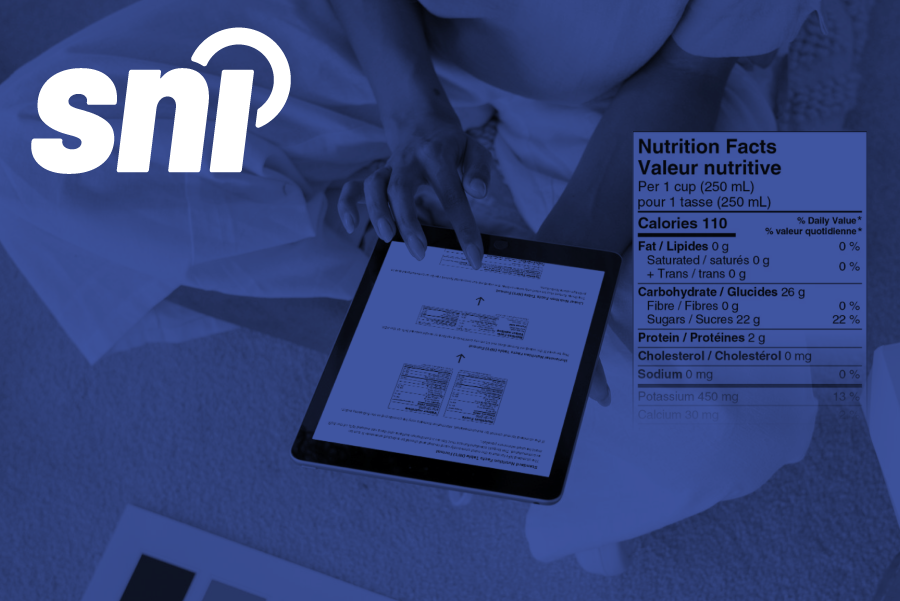
Required label information may include the common name, net quantity, name and principal place of business, ingredients and components, allergen declarations, Nutrition Facts table (NFt), and prescribed information in English and French. A front-of-package (FOP) nutrition symbol is required when applicable thresholds for saturated fat, sugars, or sodium are exceeded. Â
Â
Protein powders represented as meal replacements, nutritional supplements, or other foods for special dietary use must meet the category-specific composition and labelling requirements in Division 24 of the Food and Drug Regulations. Providing protein or other nutrients does not, by itself, qualify a product to use these representations.Â
A protein powder may be a supplemented food when it belongs to a permitted supplemented food category and contains one or more supplemental ingredients, such as certain vitamins, mineral nutrients, amino acids, or caffeine.Â
Â
Each supplemental ingredient must be permitted for the applicable category and used according to its prescribed conditions. These may include maximum amounts per serving and cautionary statements. If the product or ingredient falls outside those permissions, reformulation or another regulatory pathway may be necessary.Â
Â
Supplemented foods do not receive NPNs and generally do not require product-specific pre-market authorization. Their labels must carry a Supplemented Food Facts table (SFFt) rather than an NFt. Depending on the formulation, cautionary statements and a supplemented food caution identifier (SFCI) may also be required.Â
Â
See Canada’s Supplemented Food Labelling and Regulations for more information on what labelling requirements apply.Â
Depending on their activities, businesses that import, export, or trade food interprovincially may require a Safe Food for Canadians (SFC) licence. This generally includes Canadian importers of conventional and supplemented food protein powders, who are responsible for ensuring that imported products meet all applicable Canadian safety, composition, and labelling requirements.Â
Â
Although the quality requirements for food protein powders are generally less extensive than the NHP-specific GMP and site licensing requirements, food businesses must still implement preventive controls appropriate to their products and activities. These controls may address sanitation, allergens, biological and chemical hazards, supplier qualification, testing, traceability, complaints, and recalls. When a written preventive control plan is required, the business must document the identified hazards, the measures used to control them, and the procedures used to verify that those controls remain effective.Â
Â
See Safe Food for Canadians Licence: A Guide for Importers for further guidance.Â
Quality and safety requirements apply to protein powders regulated as foods and those regulated as NHPs, although the applicable framework differs. Food protein powders are subject to food safety and preventive control requirements, while NHP protein powders must comply with the more extensive GMP established under the Natural Health Products Regulations.
Â
Under both pathways, manufacturers and importers remain responsible for product safety, composition, and quality. Appropriate controls may address suppliers, ingredients, allergens, contaminants, testing, traceability, complaints, and recalls. The specific requirements depend on the product’s classification, formulation, and risk profile. Third-party certification may provide additional assurance, but it does not replace the applicable Canadian regulatory requirements.Â
Before importing, manufacturing or selling protein powder, a business should:
A product marketed as a food or dietary supplement in another country should not be assumed to meet Canadian requirements. In most cases, the existing formulation, claims, or label will require some degree of regulatory adjustment.
Brands should clearly define their commercial objectives, including the intended claims, target consumer, use pattern, and market positioning, when assessing which Canadian pathway is most suitable. However, the final classification must remain consistent with the product’s overall regulatory characteristics.
Completing this assessment before packaging or shipment can reduce the risk of product holds, reformulation, relabelling, recalls, and other enforcement action.
Protein powder regulations in Canada begin with classification. Conventional foods, supplemented foods, and NHPs follow different requirements for ingredients, claims, licensing, labelling and quality controls.Â
Confirming the pathway before production or importation allows the formulation, evidence, label and supply chain to be developed around Canadian requirements. Ongoing supplier oversight, testing, documentation and post-market controls are then necessary to maintain compliance.Â
As one of Canada’s top trusted names in food, supplemented food, and NHP compliance, Source Nutraceutical, Inc. (SNI) helps protein powder brands turn complex Canadian requirements into a clear path to market. From classification and formulation to licensing, labelling, importation, and quality compliance, our team can support every stage of your Canadian launch.
Ready to enter the Canadian market? Contact SNI to discuss your protein powder and commercial objectives.
No. Only protein powders classified and licensed as natural health products (NHPs) require a Natural Product Number (NPN). Conventional food protein powders and supplemented food protein powders do not receive NPNs.Â
Health Canada evaluates the finished product’s composition, representation, format, public perception, and history of use. Based on the complete product profile, a protein powder may be classified as a conventional food, supplemented food, or NHP.Â
The licensing requirements depend on the product’s classification and the activities conducted by the business. An NHP protein powder requires a Health Canada product licence and an NPN before sale. Canadian businesses that manufacture, package, label, or import NHPs must also hold the appropriate site licence. Â
Food businesses may require a Safe Food for Canadians (SFC) licence for activities such as importing, exporting, or trading food interprovincially, but conventional and supplemented foods generally do not require product-specific licences.Â
In most cases, not without a Canadian regulatory review. A U.S. protein powder must be assessed against Canadian classification, ingredient, claim, licensing, quality, and labelling requirements before it is imported or sold. Depending on the outcome, the product may require reformulation, revised claims, a Canadian-compliant label, or an NHP product licence.Â

Not sure how your functional beverage is regulated in Canada? Learn how classification, ingredients, claims, labelling, and pre-market requirements can affect your path to market.


Not sure which Canadian Nutrition Facts table (NFt) applies to your product? Learn how to determine when an NFt is required, calculate Available Display Surface (ADS), select the correct NFt format, and comply with Canadian food labelling requirements before your label goes to print.
The content on this website, including information presented in this post, is provided for general informational purposes only and does not constitute legal, regulatory, or professional advice. While efforts are made to ensure accuracy, laws and regulations vary by jurisdiction and may change over time. Readers should not rely on this information as a substitute for advice from qualified legal or regulatory professionals. We disclaim any liability for actions taken based on this content, and users are encouraged to seek guidance specific to their circumstances.